From Theatre Stages to Airport Gates: Auracast Is Moving into Public Life
At Munich Airport, passengers at six gates can now receive boarding announcements directly through compatible hearing aids, cochlear implants, earbuds and headphones.
Launched on 14 July 2026, the pilot covers four gates in Terminal 1’s Pier A and two gates in Terminal 2. Passengers can access the audio stream by scanning QR codes at the gates or, on compatible Android devices, selecting it directly from the Bluetooth menu.
Munich follows the Auracast™ pilot introduced at two gates at Frankfurt Airport in January 2026, which HearingYou reported on earlier this year.
But Munich is not simply a second airport trial. It is the latest example of a technology that is entering public venues at pace.
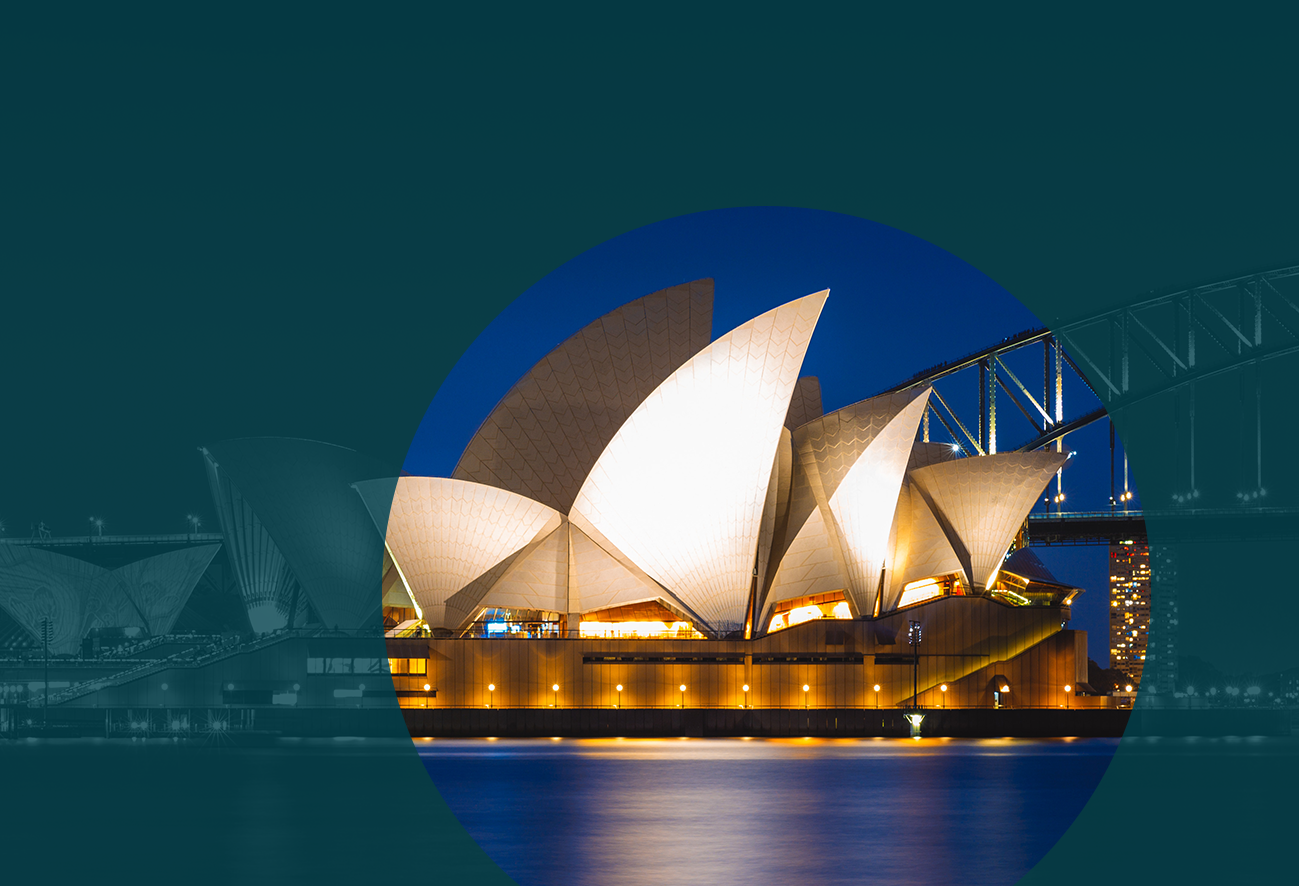
The Sydney Opera House provided an important early proof point when it became the first major cultural institution to install Auracast permanently in March 2025, introducing it in the Drama Theatre, Playhouse and Studio. The system remains part of the Opera House’s regular assistive-listening provision today.
Building on such early installations, a new wave of Auracast deployments has since been announced or documented in theatres, arts centres, cinemas, sports venues and airports across Europe, North America, Asia and New Zealand. The pattern is clear: broadcast audio is moving beyond demonstrations and into real-world infrastructure.
Theatre adoption is accelerating
Several of the most prominent recent developments have emerged in London.
In February 2026, the National Theatre began trialling Auracast during selected performances in the Dorfman Theatre, ahead of plans to make the system publicly available in the venue later in the year.
In March, Delfont Mackintosh Theatres announced that Auracast was available across all eight of its West End venues, including the Prince of Wales, Sondheim, Victoria Palace and Noël Coward theatres. The underlying installation—comprising 21 transmitters across the eight venues—had been completed in October 2025. Auracast receivers are now available to collect from theatre cloakrooms with headphones or personal induction loops.
The Almeida Theatre followed with an installation for performance audio in April, while continuing to provide infrared-enabled induction neck loops for visitors using telecoil-equipped hearing aids or cochlear implants.
Beyond London, a case study published in April documented an Auracast deployment at the Goodman Theatre in Chicago. Another April case study featured Overshadowed Theatrical Production, a non-profit company in the Chicago area that had previously offered no assistive-listening system.
Further deployments documented in May included the Ropetackle Arts Centre in Shoreham-by-Sea in the United Kingdom and the historic Strand Theatre in Rockland, Maine.
Together, these examples show that Auracast is not limited to major national institutions. It is equally relevant to commercial theatre groups, non-profit companies, historic venues and community arts centres.
New Zealand shows how the transition can work
In Tauranga, the Baycourt Community and Arts Centre introduced Auracast in its 582-seat Addison Theatre after audience feedback highlighted inconsistent coverage and reliability problems with its existing telecoil system.
Baycourt retained the telecoil while adding Auracast as a new listening option. This hybrid model provides access to the new system while preserving support for visitors whose devices are not yet Auracast-compatible.
One of the most recently documented cultural examples is the Isaac Theatre Royal in Christchurch. Its case study was published on 13 July 2026, one day before the Munich Airport pilot launched.
The 1,274-seat historic theatre hosts drama, concerts, dance, comedy and conferences. Its Auracast system is designed to support enhanced performance audio as well as services such as audio description and language translation.
New Zealand had already provided an important sports-sector precedent at Stadium Taranaki. Installed as part of a major redevelopment in 2025, its system broadcasts official audio and announcements in key public areas, with dedicated receivers also available from the venue.
These different deployments demonstrate how Auracast can be used in both intimate cultural settings and large venues where commentary and announcements compete with substantial crowd noise.
Cinemas are following
In Japan, the MOVIX cinema chain has introduced permanent Auracast installations at selected locations, including Kawaguchi, Kameari, Shimizu and Miyoshi.
The installations complement the cinemas’ existing infrared systems. Receivers and neck-loop options are available for visitors without compatible personal devices.
The MOVIX deployment also demonstrates the wider potential of broadcast audio. In addition to clearer dialogue, the same infrastructure could support audio description and alternative-language soundtracks. Test users reported more consistent sound and improved dialogue comprehension in complex cinema soundscapes.
In Germany, the independent Camera Zwo cinema in Saarbrücken installed transmitters in all five of its screening rooms. The venue had previously struggled to find an assistive-listening solution that was both affordable and easy for visitors to use.
Early users reported that the direct audio stream made dialogue easier to follow, including in films shown in their original language.
The MOVIX and Camera Zwo examples are significant because they show that Auracast can scale in very different cinema environments, from a multi-site operator to a small independent venue.
One technology, many public environments
The applications differ, but the underlying benefit is the same.
In theatres, dialogue and singing must remain intelligible alongside music and effects. In cinemas, speech is embedded in complex soundtracks. At sports venues, commentary competes with crowd noise. At airports, short and time-sensitive messages must be understood in large, reverberant terminals.
Auracast transmits a venue’s audio signal directly to compatible receiving devices, reducing the effects of distance, background noise and challenging room acoustics.
At Munich Airport, announcements can fade in over music, podcasts or other audio on compatible Android devices and fade out again when the message has finished. The same infrastructure can therefore serve passengers with hearing loss and travellers using ordinary consumer earbuds.
This is one of Auracast’s defining strengths: accessibility is built into the mainstream experience rather than separated from it.
Auracast is becoming public infrastructure
The current wave of deployments shows that Auracast is moving decisively beyond demonstration projects.
Munich Airport is the newest high-profile example, but it belongs to a much broader development. From the Sydney Opera House, the National Theatre and eight West End venues to theatres in Chicago and Maine, community arts centres in New Zealand, cinemas in Japan and Germany and a major sports stadium, Auracast is entering the places where people travel, gather and experience culture.
For some venues, it modernises an existing assistive-listening service. For others, it makes such a service possible for the first time. In both cases, the direction is the same: clearer, more direct audio is becoming part of the venue itself rather than a separate service that visitors must seek out.
The spread across different countries and types of venue is significant. It shows that Auracast is not tied to one use case, building type or audience. The same technology can support theatre performances, cinema dialogue, sports commentary and time-critical airport announcements.
Auracast is moving from innovation to implementation—and becoming a practical part of public life.