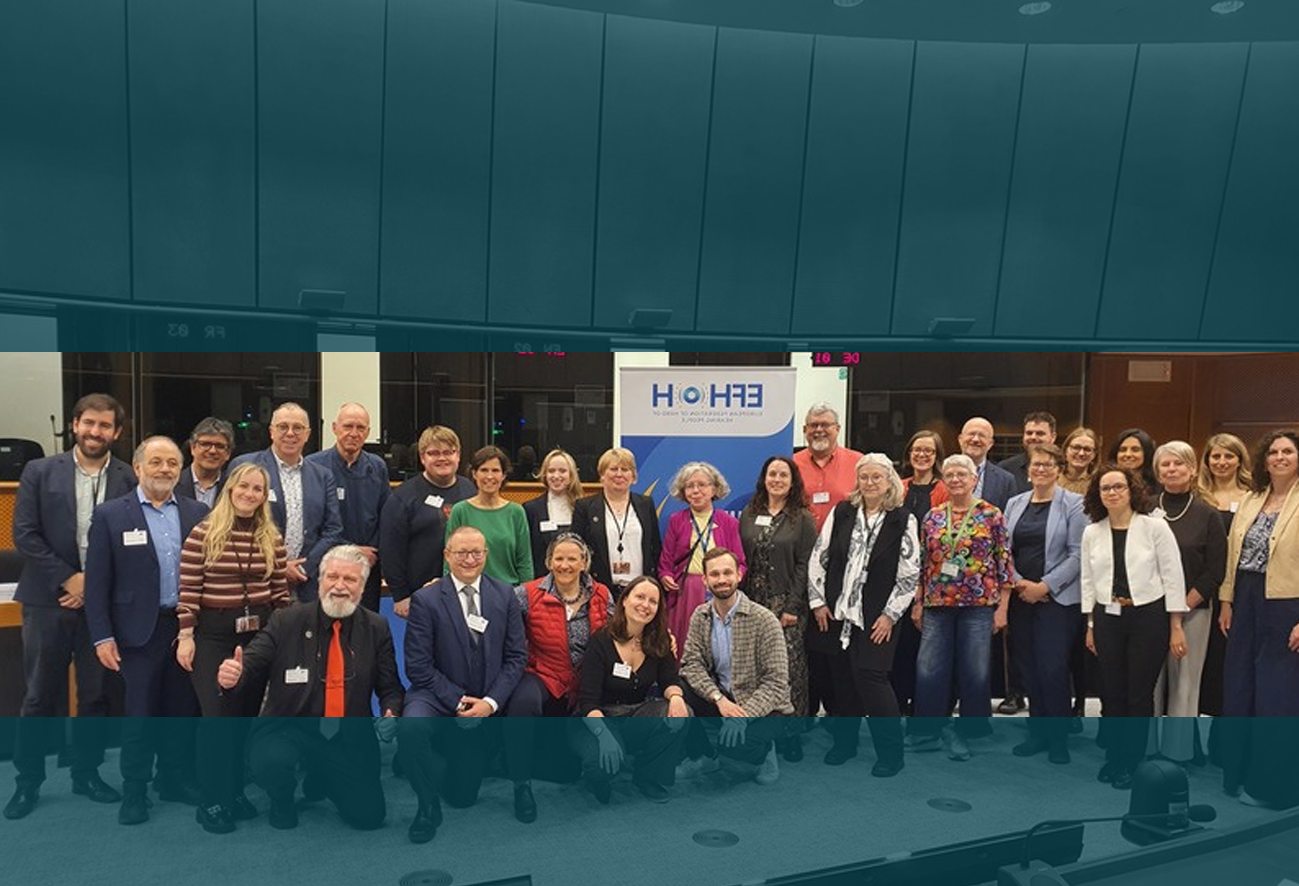
As part of World Hearing Day 2026, policymakers, experts, and advocates came together on 4 March at the European Parliament for a high-level discussion on hearing health across the life course. The event, “Hear the Future: Breaking Barriers for an EU Strategy on Hearing Loss”, was organised by the European Federation of Hard of Hearing People (EFHOH) and the European Association of Hearing Aid Professionals (AEA), and hosted by MEP Katrin Langensiepen.
Bringing together representatives from the World Health Organization (WHO), civil society, and the hearing care sector – including Shelly Chadha (WHO), Nicole Sophie Marinos (AHEAD), Mark Laureyns (AEA), Lidia Best ‘EFHOH) and Jonathan Elebjörk Wahlström (IFHOHYP) – the discussion explored how hearing health supports inclusion, access to education, and sustainable employment across Europe.
Evidence presented during the event highlighted persistent structural barriers faced by people with hearing loss. Communication challenges, listening fatigue, and limited access to reasonable accommodations continue to restrict equal participation in both education systems and the labour market.
Addressing barriers to participation across education and employment
Speakers emphasised that these challenges require greater recognition within EU policymaking, particularly in areas linked to inclusion, skills development, and workforce participation.
Integrating hearing health into EU policy frameworks
A central theme of the discussion was the need to better integrate hearing health into EU health, education, and employment policies. Participants highlighted that hearing loss should be addressed not only as a medical issue, but also as a social and economic factor influencing participation across the life course.
The importance of inclusive environments – supported by appropriate accommodations and access to hearing technologies – was underlined as a prerequisite for enabling full participation.
From discussion to action: priorities for EU policymakers
The event concluded with a clear call for strengthened policy action at both EU and national level. Key priorities identified include:
- Developing a coherent EU Strategy on Hearing Loss, addressing hearing health across the life course
- Strengthening early detection and screening programmes to enable timely intervention
- Ensuring affordable and equitable access to hearing care and technologies
- Promoting inclusive education and accessible workplaces, supported by appropriate accommodations
- Increasing awareness of hearing loss and its societal impact among policymakers, employers, and the public
These actions aim to support participation in education, employment, and society, while reducing the long-term social and economic impact of untreated hearing loss.
EHIMA supports these calls for action and reiterates the importance of integrating hearing health into EU policy frameworks. As highlighted through its work and evidence base, improving access to hearing care and strengthening early intervention are essential to enable inclusion, support workforce participation, and address the growing public health impact of hearing loss in Europe.